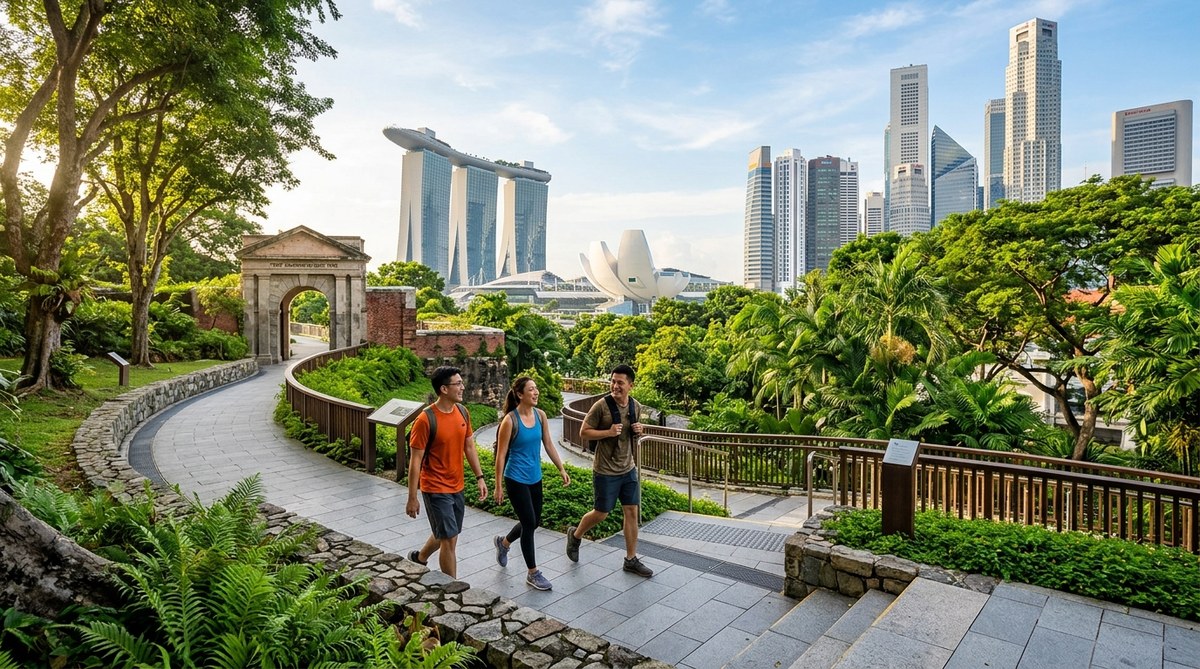
Singapore is a city where street corners tell stories as vivid as the skyline. Every neighborhood wears its history like a layered, living mural, revealing how people lived, worked and ate together across decades. For architecture lovers, urban explorers, and food enthusiasts, heritage walking trails offer a passport to the past without leaving the present. At To-Gather.sg we believe walking is the most intimate way to understand how Singapore grew from a trading port into a modern metropolis while keeping its character. This guide highlights the best heritage walking trails in Singapore and what to look for on each route, so you can design a day or a weekend that feels both nostalgic and newly discovered.
Why heritage walking trails matter
Walking a heritage trail is more than checking off landmarks. It’s about reading streetscapes, façades and public spaces as a dialogue between old and new. Here is why these trails matter:
- They illuminate architecture and urban design that shaped Singapore’s character
- They reveal multicultural layers that still influence food, language, and daily life
- They support local communities by encouraging walkable neighbourhoods and small businesses
- They offer photo opportunities and storytelling moments for families, students, and couples
- They help residents and visitors alike cultivate a sense of belonging in a rapidly changing city
If you are visiting or local, you can map these trails to fit a morning, afternoon or full day. And if you want more than a static map, digital checkpoints and guided insights are increasingly common on some routes, turning a simple walk into a self-guided learning experience.
Plan your heritage walking journey
Before you lace up your walking shoes, here are practical tips to maximize insight and enjoyment:
- Choose a trail that matches your pace. Some routes are short and gentle, while others cover longer segments or hilly streets.
- Start early or late in the day to avoid heat and crowds, especially in the central and historic districts.
- Bring water, sunscreen and a lightweight bag. A small notebook or a phone with offline maps helps if you want to jot down memories or scan QR codes along the way.
- Check public transport options. Most heritage trails have easy access via MRT or bus; many start near a station or a well-known landmark.
- Pair trails with a bite. Many neighborhoods along these trails are famed for local hawker centres and food stalls. Plan a snack or meal at an iconic spot after your walk.
- Respect the spaces. Some sites are living neighborhoods with residents; keep noise to reasonable levels and dispose of trash properly.
Now, let us take you through a curated set of Singapore’s best heritage walking trails. Each entry includes highlights, starting points, what to look out for, and why it resonates with architecture and urban living.
Top Heritage Walking Trails in Singapore
Tiong Bahru Heritage Trail
Tiong Bahru is one of Singapore’s most charming and enduring neighborhoods. Its art deco blocks, low-rise flats and playful street corners tell a story of early public housing and a community that learned to thrive in compact spaces.
- Highlights
- Art deco façades along Seng Poh Road and Wing Fong Street
- The curved blocks with their rooftop water tanks and decorative panels
- Tiong Bahru Market and hawker stalls that preserve a sense of of daily life from decades past
- Independent boutiques and local coffee shops that celebrate neighborhood character
- Starting point ideas
- Tiong Bahru MRT Station or the area around Tiong Bahru Market
- What to observe
- The horizontal lines, rounded balconies and the way ground-floor shopfronts interact with the street
- The contrast between new cafés and vintage storefronts
- Why it matters for architecture and urban living
- It shows how early housing schemes balanced density, light, and community amenities
- It demonstrates how Y-shaped pedestrian streets and courtyard entries created social cohesion
Joo Chiat / Katong Heritage Trail
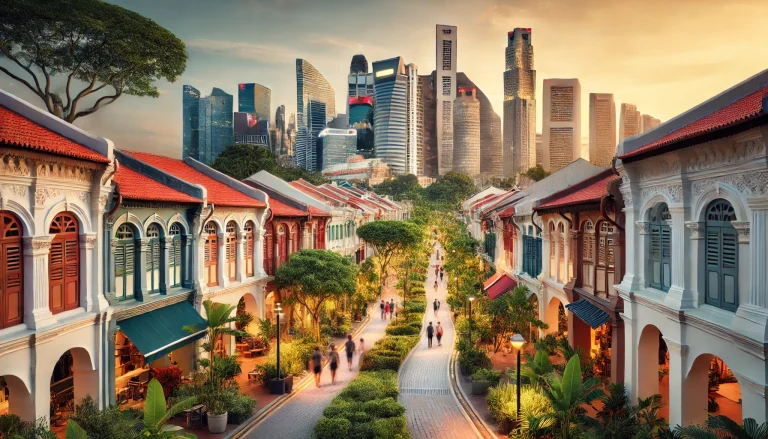
Joo Chiat and Katong are synonymous with Peranakan heritage, vibrant shop houses, and a distinct culinary language. This route invites you to walk through colors, patterns, and memories that shaped a cosmopolitan street culture.
- Highlights
- Peranakan shophouses with rich tilework and bright façades
- Joo Chiat Road, Changi Road and East Coast area hangouts and eateries
- Katong’s traditional coffee shops and colorful murals
- Starting point ideas
- Nonya Heritage Centre area or Katong/Koon Seng Road streets
- What to observe
- The intricate tilework on ground level, the carved shutters, and the interplay of pastel tones
- The subtle shifts from old to new while retaining a pedestrian friendly scale
- Why it matters for architecture and urban living
- It showcases how multi-ethnic communities built a shared street life with distinct architectural markers
Little India Heritage Trail
Little India is a sensory tapestry of color, sound and scent. This trail captures a dense, urban neighborhood where temples, markets and colonial-era buildings mingle to create a living cultural landscape.
- Highlights
- Serangoon Road and the Little India Arcade
- Sri Veeramakaliamman Temple and other places of worship with architectural symbolism
- Colourful shophouses and bustling market life
- Starting point ideas
- Little India MRT Station or the iconic Tekka Centre
- What to observe
- The ethnically diverse storefronts and the interplay of signage in multiple languages
- The way light and activity shift from morning markets to evening social spaces
- Why it matters for architecture and urban living
- It reveals how religious and cultural institutions anchor community networks in a dense urban fabric
Kampong Glam Heritage Trail
Kampong Glam anchors Singapore’s Malay heritage and Islamic architecture. Its streets tell stories of trade, faith and evolving urban identity.
- Highlights
- Sultan Mosque, Malay Heritage Centre, and Arab Street
- Haji Lane with its creative boutiques and street art
- Shophouses that mix Malay and colonial influences
- Starting point ideas
- Bugis MRT Station or near Sultan Mosque
- What to observe
- The dome and minarets of the mosque against the brick tones of surrounding shophouses
- The texture of modern cafés tucked into centuries-old streets
- Why it matters for architecture and urban living
- It demonstrates the blending of religious and commercial life through built form
Queenstown Heritage Trail
Queenstown is a storied neighborhood in Singapore’s public housing history and post-war urban design. This trail highlights resilient communities and the evolution of housing models.
- Highlights
- Early HDB blocks and green courtyards
- Local markets and neighborhood amenities that served residents across generations
- Starting point ideas
- Queenstown bus interchange or near the Alexandra Road corridor
- What to observe
- The modular planning of flats and the way shared spaces influence social interactions
- The transformation of older estates with new amenities
- Why it matters for architecture and urban living
- It offers a case study on public housing evolution and the balance between density and livability
Balestier Heritage Trail
Balestier is a gastronomic and architectural hotspot. The area contrasts old shophouses with bakeries and eateries that have fed generations.
- Highlights
- Balestier Road’s iconic shophouses
- Famous bakeries and local eateries
- Snippets of colonial architectural influence in a modern urban context
- Starting point ideas
- Balestier Road corridor or Rochor area for a nearby transition into central heritage routes
- What to observe
- The evolution of shopfront typologies and their adaptation for contemporary use
- Why it matters for architecture and urban living
- It shows how commercial activity can preserve street level heritage while supporting a thriving local economy
Jubilee Walk
Jubilee Walk is a longer route that invites you to trace a historic corridor across multiple precincts. It is ideal for a weekend exploration or a longer urban stroll.
- Highlights
- Historic civic districts, riverbanks and early commercial zones
- Monuments and green spaces that punctuate the route
- Starting point ideas
- City Hall or Parliament area
- What to observe
- The continuity of public space use across decades
- How monuments and urban green spaces frame daily life
- Why it matters for architecture and urban living
- It paints a broad picture of Singapore’s urban evolution in a single extended walk
Bukit Timah Heritage Trail
Bukit Timah offers a different pace: green, hillside streets with colonial and early residential architecture. It’s a shaded, calm counterpoint to more central trails.
- Highlights
- Colonial era bungalows and quiet residential streets
- Proximity to Botanic Gardens and natural spaces
- Starting point ideas
- Botanic Gardens MRT or Bukit Timah area
- What to observe
- The way houses sit along gentle slopes and streets approach the hillside
- Why it matters for architecture and urban living
- It connects nature with built form, illustrating how landscape shape influences neighborhood design
Toa Payoh Heritage Trail
Toa Payoh is a cornerstone of Singapore’s public housing story and urban planning. It offers a snapshot of early HDB design, with a strong sense of neighborhood pride.
- Highlights
- Early HDB blocks, pedestrian precincts, and community spaces
- The iconic Toa Payoh Town Park and neighborhood landmarks
- Starting point ideas
- Toa Payoh MRT or surrounding community hubs
- What to observe
- How communal spaces are designed to foster social ties
- The balance between high density living and human scale
- Why it matters for architecture and urban living
- It demonstrates how public housing planning can nurture community identity and continuity
Bedok Heritage Trail
Bedok provides a longer, coastal and community-focused trail that can be enjoyed as a half day or split into segments. It’s a great way to see how seaside and inland neighborhoods contributed to Singapore’s urban fabric.
- Highlights
- Coastal and park spaces, local markets and heritage shops
- A mix of residential blocks and community spaces
- Starting point ideas
- Bedok Central or Bedok Reservoir area
- What to observe
- The way commercial and residential areas interact along a long, continuous corridor
- Why it matters for architecture and urban living
- It highlights how regional development patterns influenced everyday life on Singapore’s eastern edge
Making the most of your heritage trail
- Combine two trails for a full-day immersion. For example, pair Tiong Bahru with Joo Chiat Katong for a complete East-Side heritage arc.
- Mix architecture with food. Many trails end near hawker centers or iconic eateries; plan a tasting stop to connect history with local flavors.
- Photograph with intention. Capture details like tile patterns, window shutters, and signage from the era that shaped the neighborhood.
- Bring a small notebook. Jot down street names, dates you see on plaques, and any personal memories that surface during the walk.
- Use public transit to create loop trips. Start near a station and return via a different route for a fresh perspective.
Family friendly and accessibility considerations
- Opt for shorter, well-paved routes if you’re walking with kids or seniors. Tiong Bahru, Little India and Kampong Glam are generally stroller friendly around main streets.
- Check for shade and water stops. Some routes can be sunny, so plan breaks at parks or covered walkways.
- Many neighborhoods have active community groups and walking clubs that offer guided tours or neighborhood talks. Look for local meetups or digital guides to enrich your experience.
How to document your journey
- Create a mini travelogue of each trail with photos and a few notes on what stood out
- Save landmark coordinates and a short description in a note app so you can recreate or adjust future walks
- Share your route with friends and family to inspire them to explore local heritage in their own neighborhoods
Bringing Singapore heritage to life on To-Gather.sg
At To-Gather.sg we celebrate the intersection of architecture, urban living, and heritage. Our coverage includes neighborhood evolution, mixed-use developments, and the way culture flows through street life and design. If you are planning your own heritage walk, use these trails as a starting point and tailor them to your interests—architecture details, culinary history, or social history.
We also encourage readers to consider the broader context of heritage:
– How old blocks were designed to foster community interactions
– The ways new developments adapt and preserve the character of a neighborhood
– The role of public spaces in daily life and cultural exchange
Whether you are a devoted architecture aficionado or simply curious about how Singapore became what it is today, these heritage walking trails offer a gateway to discovery—one street at a time.
Final thoughts
Heritage walking trails in Singapore reveal a city that is as much about people as it is about bricks and glass. They offer a practical route to witness urban evolution while giving you a human-centered lens on how neighborhoods live and breathe today. Whether you start with a compact route like Kampong Glam or a longer excursion such as Jubilee Walk, you will encounter a layered city that continues to grow without losing its sense of place.
If you are looking for more about architecture and urban living on the island, keep an eye on To-Gather.sg for fresh routes, neighborhood looks, and insights into how heritage shapes everyday life in Singapore. Happy walking, and may your steps uncover stories worth sharing.